TLDR: For AlloyDB, C4A is a significant improvement at the same cost. Considering the migration takes a single click, you absolutely should take advantage of it.
GCP and AWS are pushing their custom ARM CPUs to customers, and for GCP, that's their Axion ARM-based processors. They are now available all over the platform, including for some managed services such as AlloyDB. So should you switch?
For your application, it's not easy to give a simple answer that would apply to everyone. But for managed services, it's only a matter of performance. We did the switch for AlloyDB from N1 to C4A a few days ago, and here are some charts. Considering the switch is free and takes a single click, I think those improvements are great.
First database: Very high continuous load, non-web-driven
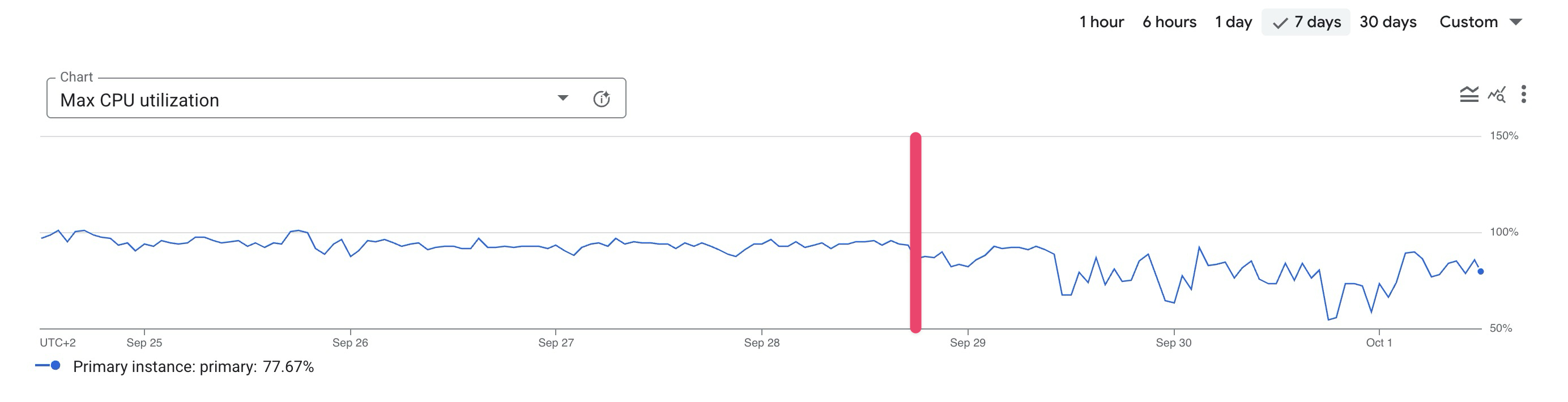
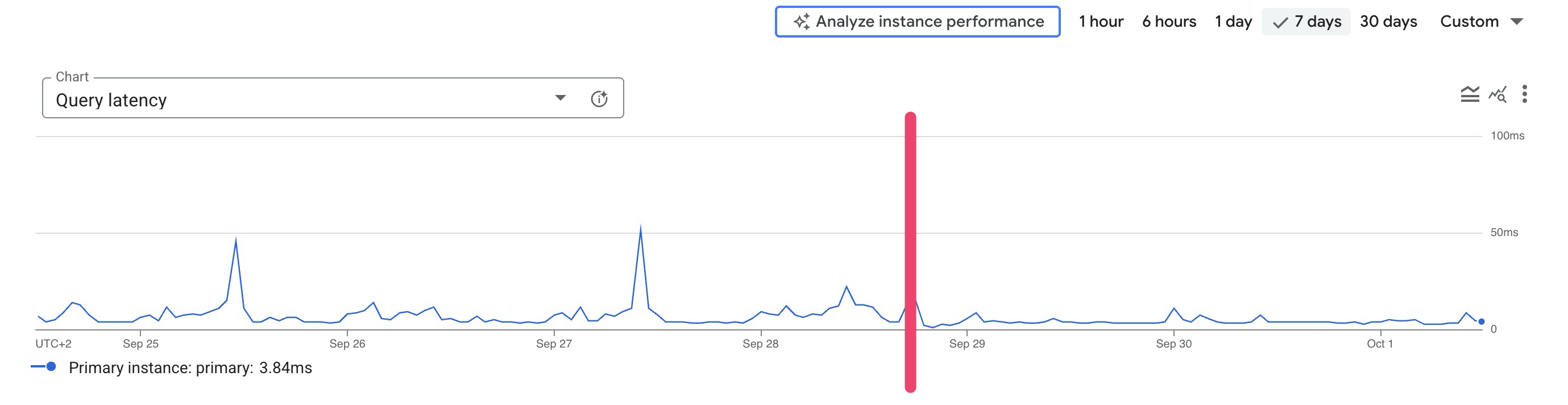
As you can see in the charts, the database load continuously hovered around 100%, and query latency would frequently spike. The database now has some breathing room, query latency is down, and peak requests per second increased by 50%.


Second database: Web application
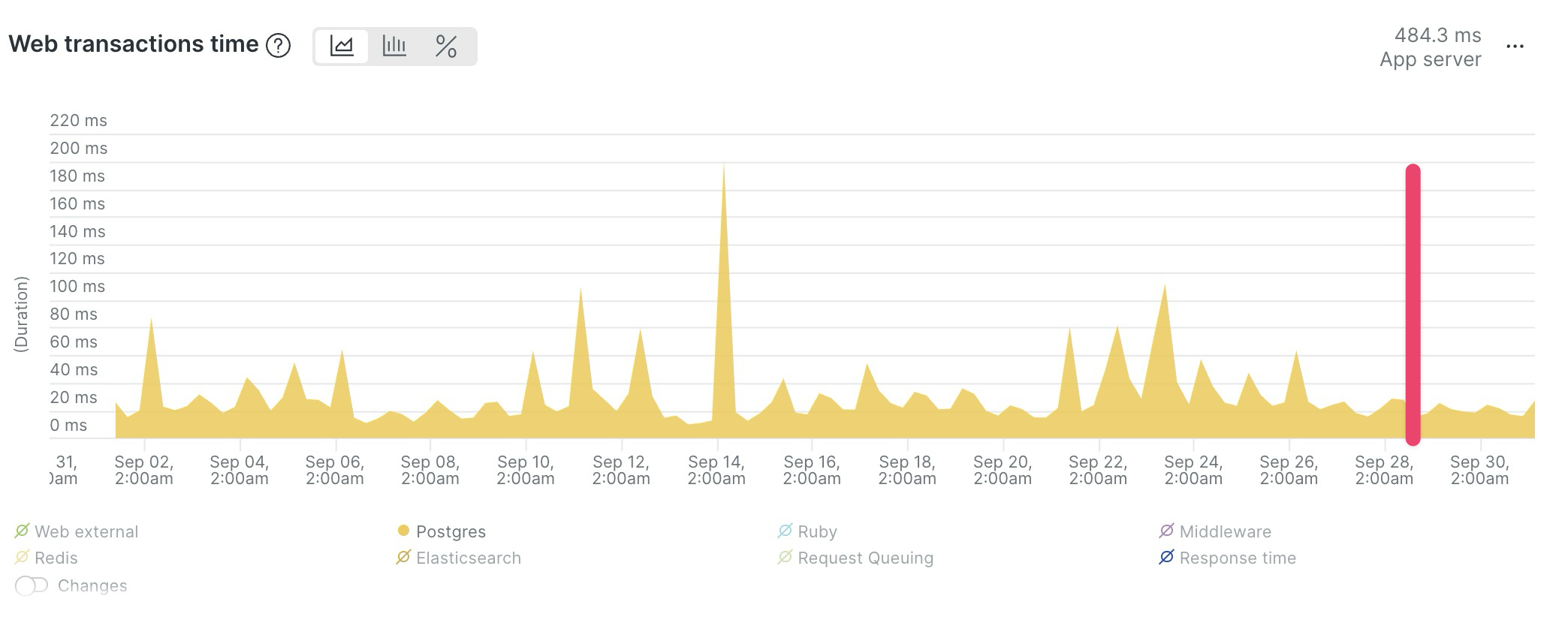
Results are less drastic. The database is heavily used but not as much as the previous one. Nevertheless, we can see the average CPU usage decrease, and query latency spikes are reduced as well.

Comments